
Why Nutrient Deficiency Matters More Than You Think
When plants lack nutrients, they don’t fail instantly. Instead, they suffer silently and gradually. Leaves change color, growth slows, and resilience fades.
At first, the damage looks cosmetic. However, over time, nutrient deficiency weakens roots, disrupts photosynthesis, and leaves plants vulnerable to disease and pests.
Because of that, recognizing early warning signs is crucial and empowering for every gardener.
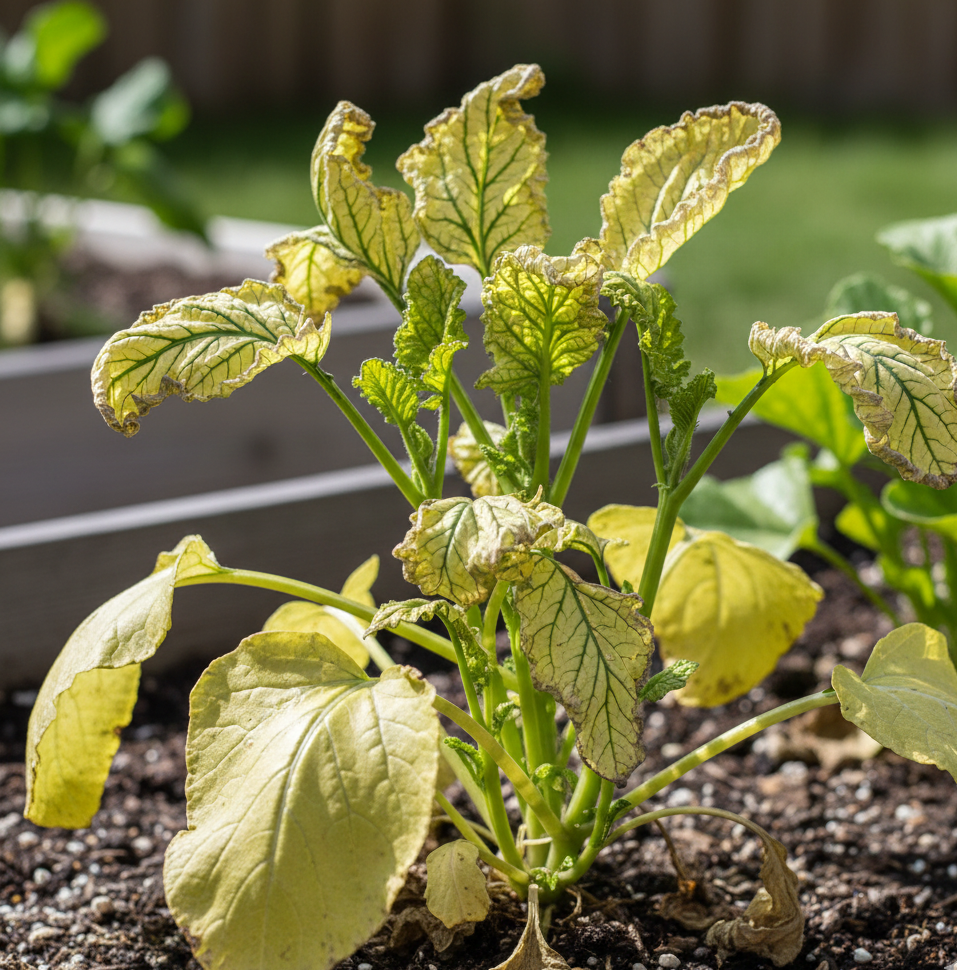
Common Signs of Nutrient Deficiency in Plants
Although symptoms vary, most nutrient deficiencies show clear patterns. Therefore, careful observation makes diagnosis much easier.
1. Yellowing Leaves (Chlorosis)
Yellow leaves are one of the most alarming signals plants send. Usually, this means a lack of nitrogen, iron, or magnesium.
- Older leaves yellow first → nitrogen deficiency
- Young leaves yellow first → iron deficiency
👉 Related guide: Yellow Leaves on Plants: Causes and Solutions
2. Slow or Stunted Growth
If your plant looks alive but refuses to grow, nutrient imbalance may be the reason. Without proper nutrition, plants cannot produce new cells efficiently.
As a result, stems stay short, leaves remain small, and flowering is weak or absent.
👉 Helpful read: Slow Plant Growth: Common Reasons and Fixes
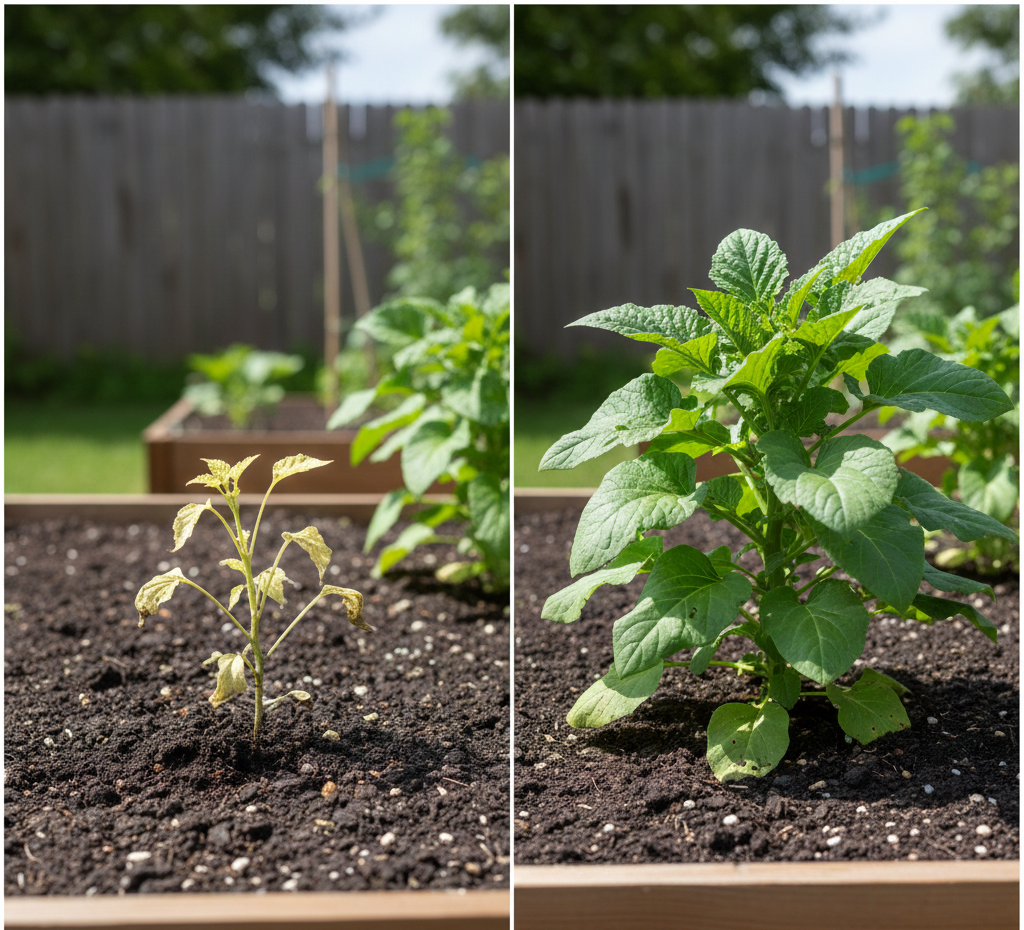
3. Purple or Reddish Leaves
Unusual red or purple coloring often signals phosphorus deficiency. This problem appears more frequently in cold or compacted soil.
Because roots struggle to absorb nutrients in poor conditions, discoloration becomes visible quickly.
👉 Learn more: How to Improve Poor Garden Soil Naturally
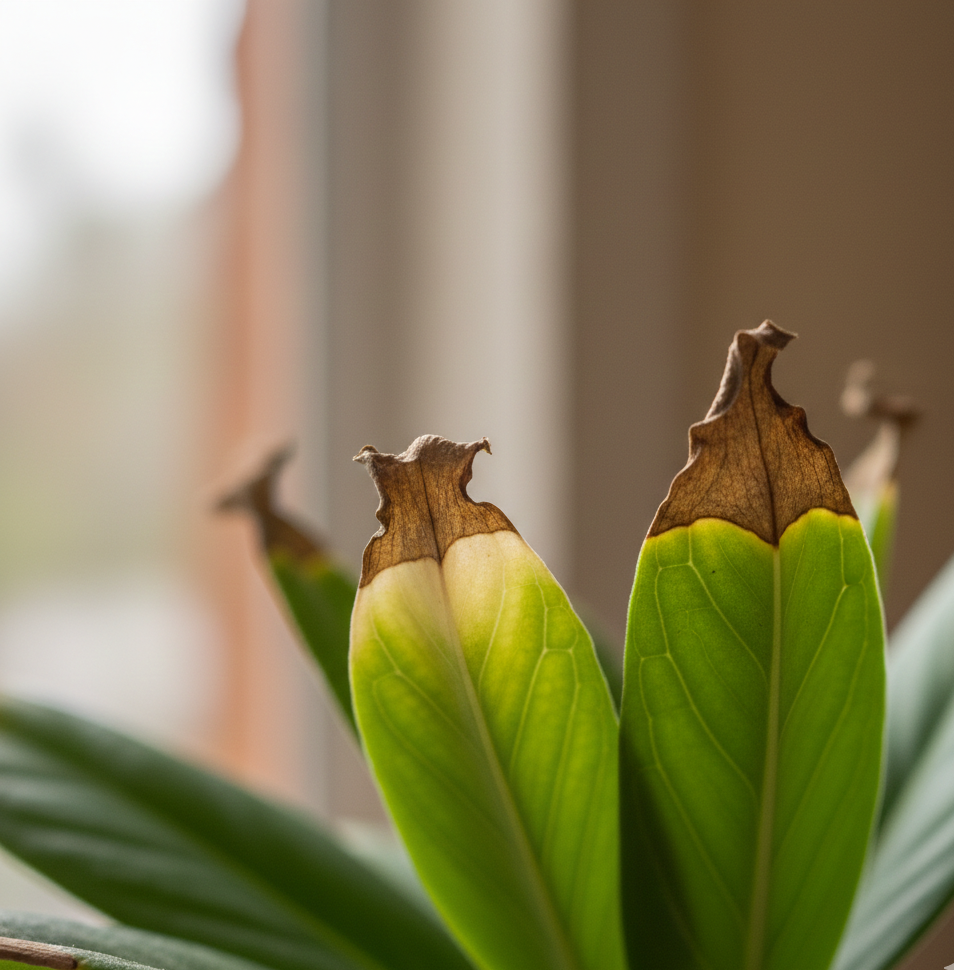
4. Brown Leaf Tips and Edges
Brown, crispy edges usually indicate potassium deficiency. In many cases, leaves look burned, dry, or fragile.
Eventually, this stress reduces the plant’s ability to regulate water efficiently.
👉 See also: Brown Tips on Leaves: What They Mean
5. Weak Stems and Poor Flowering
When plants lack calcium or potassium, stems weaken and flowers fail to develop properly. Consequently, plants bend, collapse, or drop buds early.
This issue is especially devastating for flowering plants and vegetables.
What Causes Nutrient Deficiency?
Nutrient problems aren’t always caused by poor soil. In fact, several hidden factors may be involved.
- Overwatering washes nutrients away
- Compacted or depleted soil blocks absorption
- Incorrect pH prevents nutrient uptake
- Overfertilizing damages roots
👉 Related article: Overwatering Plants: Signs, Effects, and Solutions
How to Fix Nutrient Deficiency the Right Way
Instead of guessing, follow these powerful and proven steps.
Step 1: Identify the Symptoms Carefully
Look at which leaves are affected first, how fast symptoms spread, and whether color changes appear suddenly or gradually.
Step 2: Improve Soil Quality
Healthy soil is the foundation of healthy plants. Therefore, add organic matter or use balanced fertilizers only when needed.
👉 Read: Best Soil for Healthy Plant Growth
Step 3: Fertilize Correctly
Avoid excess fertilizer — it can be just as harmful as deficiency. Apply nutrients slowly and follow plant-specific recommendations.
👉 Essential guide: How to Use Fertilizers Correctly Without Harming Plants

Can Plants Recover From Nutrient Deficiency?
Thankfully, yes. Most plants recover once nutrients are restored and soil conditions improve. However, damaged leaves may not heal and should be removed.
If the plant still struggles, recovery techniques can help.
👉 Final rescue guide: How to Revive a Dying Houseplant
Final Thoughts
Nutrient deficiency in plants is not a failure — it’s communication. Once you learn to read the signs, your confidence grows and your plants respond.
By acting early, improving soil health, and feeding wisely, you give plants the strength to thrive again 🌿