
White mold on plant soil can look alarming and unpleasant at first glance. However, in most cases, it is not as dangerous as it seems. Still, this fuzzy white layer is a clear signal that something in your plant care routine needs adjustment.
Fortunately, you can remove white mold quickly and prevent it from coming back. This guide explains the real causes and the most effective fixes.
What Is White Mold on Plant Soil?
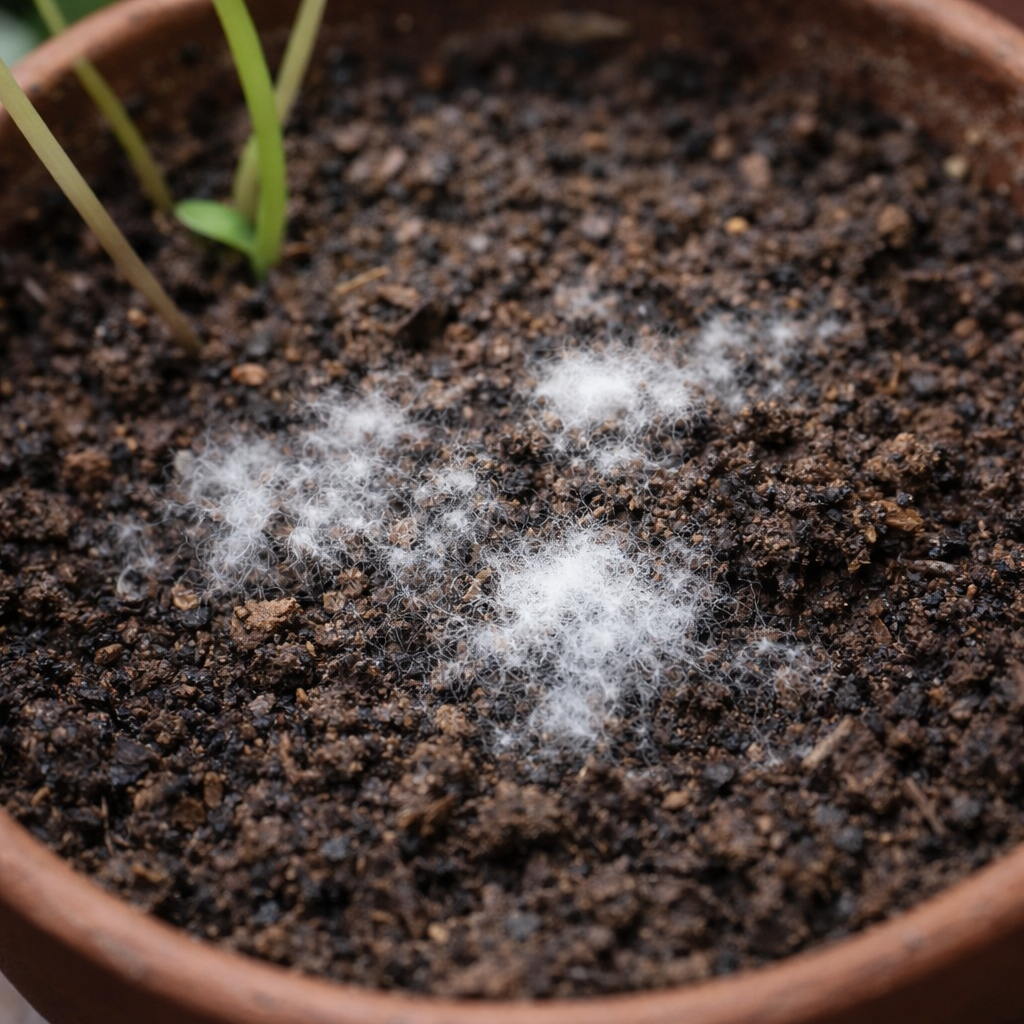
White mold is usually a type of harmless fungus that grows on the surface of moist soil. It thrives in humid, low-airflow environments where moisture lingers for too long.
As a result, it forms a soft, powdery, or slightly fuzzy layer on the soil.
Although it may look unpleasant, it typically does not harm the plant directly. However, it often indicates conditions that can lead to bigger problems.
What Causes White Mold on Soil?
Several factors contribute to mold growth. In most cases, it is not just one issue but a combination of conditions.
1. Overwatering
Excess moisture is the main trigger. When soil stays wet for too long, fungi begin to grow.
If this sounds familiar, check Overwatering Plants: Signs, Effects, and Solutions
2. Poor Air Circulation
Stagnant air allows moisture to accumulate. As a result, mold spores multiply more easily.
3. Organic Material in Soil
While organic matter is beneficial, it can also feed fungal growth when combined with excess moisture.
4. Low Light Conditions
Low light slows evaporation. Therefore, the soil remains damp for longer periods.
You can learn more in Low Light Problems in Indoor Plants
Is White Mold Dangerous?
In most situations, white mold is not harmful to your plant. However, it is a warning sign.
If ignored, the same conditions may lead to:
- root rot
- pest problems
- slow plant growth
For example, persistent moisture can eventually damage roots. Read Root Rot in Plants: Causes, Symptoms, and How to Save Your Plant
How to Remove White Mold (Fast Fix)
Removing mold is simple if you act early. Follow these steps carefully.
Step 1: Remove the Top Layer
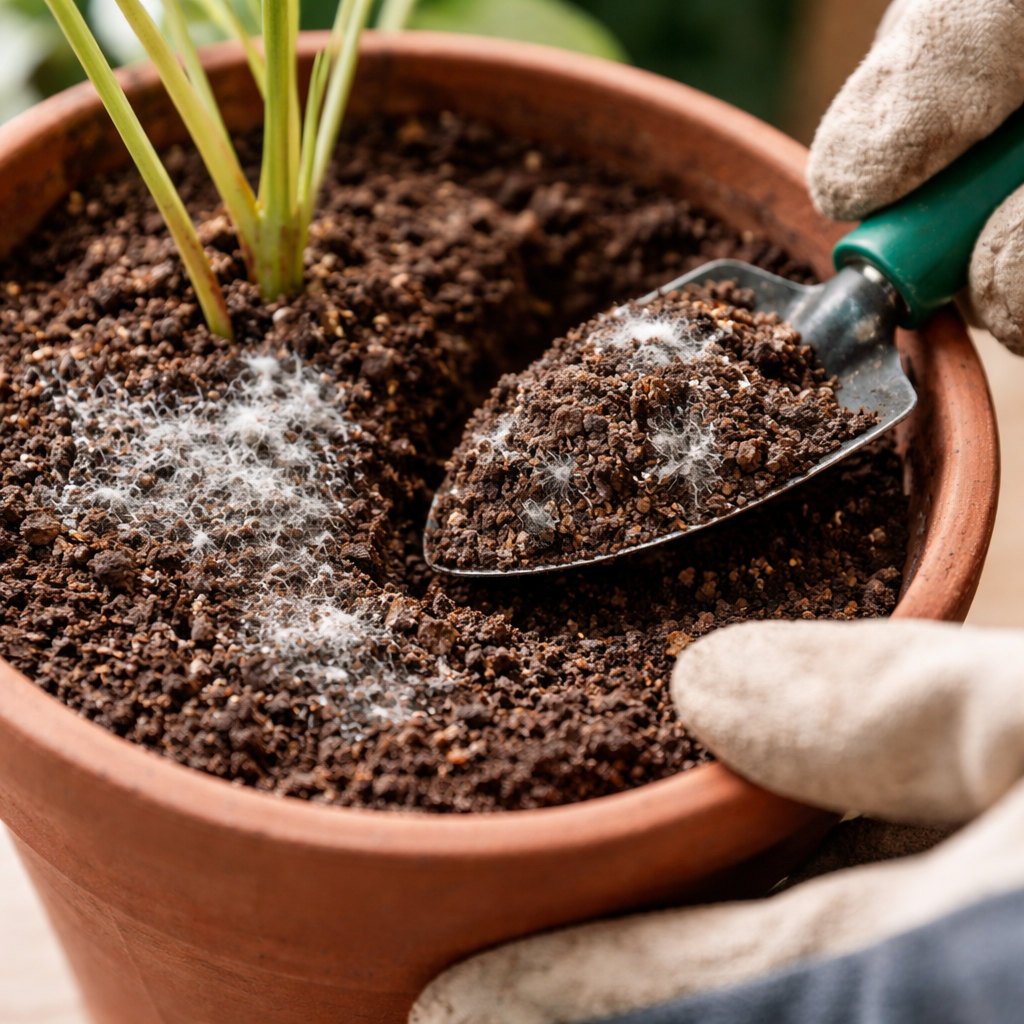
Gently scrape off the top 1–2 cm of affected soil. This eliminates most of the visible fungus.
Step 2: Let the Soil Dry
Allow the soil to dry out before watering again. This step is crucial because mold cannot survive in dry conditions.
Step 3: Improve Airflow
Move the plant to a well-ventilated area. Even slight air movement can reduce humidity.
Step 4: Adjust Watering
Water less frequently and always check soil moisture first.
If you’re unsure, read How Often Should You Water Indoor Plants?
How to Prevent White Mold
Prevention is much easier than treatment. Once conditions improve, mold rarely returns.
Use Well-Draining Soil
Choose a loose soil mix that allows excess water to escape.
See Best Soil for Healthy Plant Growth
Avoid Overwatering
Let the top layer dry before watering again.
Increase Light Exposure
Brighter light helps soil dry faster and reduces fungal growth.
Ensure Proper Drainage
Always use pots with drainage holes.
When Should You Repot?
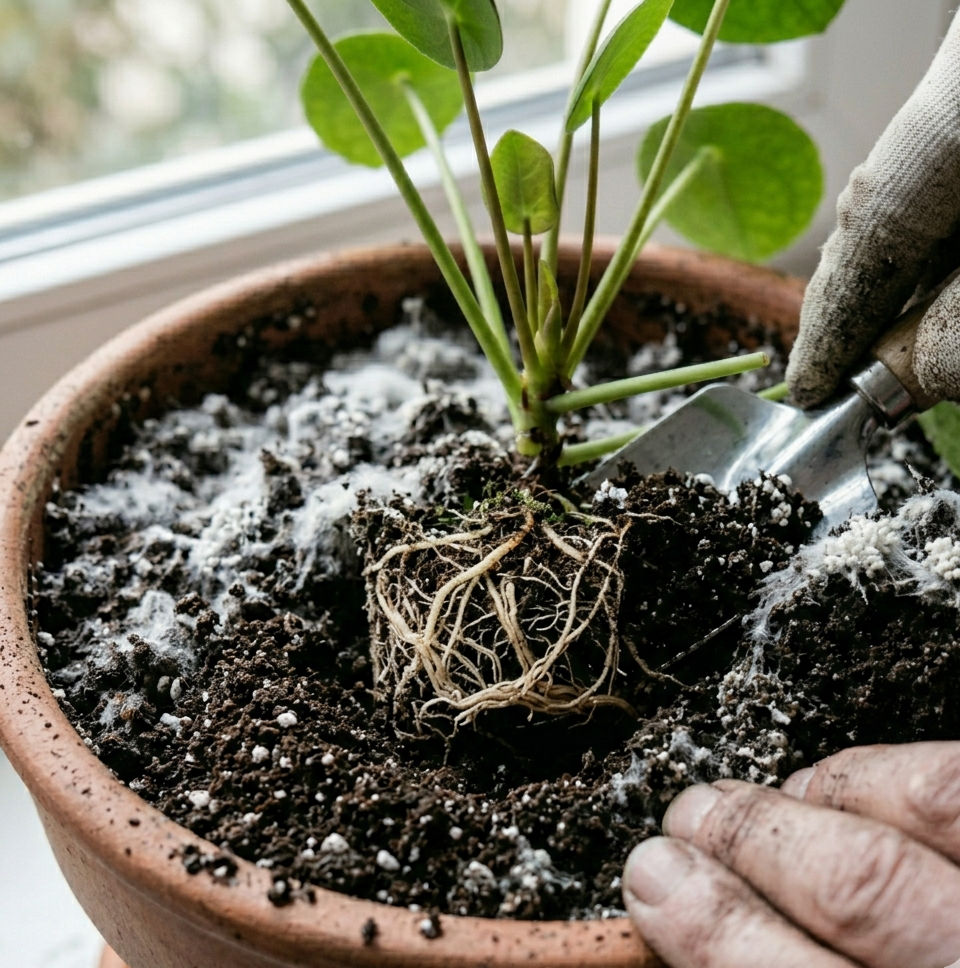
If mold keeps coming back, repotting may be necessary.
Repot when:
- mold returns repeatedly
- soil smells unpleasant
- drainage is poor
Fresh soil can dramatically improve plant health.
Final Thoughts
White mold on plant soil may look worrying, but it is usually easy to fix. More importantly, it highlights issues like excess moisture or poor airflow.
Once you correct these conditions, your plant will recover and continue to grow normally.
With consistent care and a few simple adjustments, you can keep your soil clean, healthy, and mold-free.