
White patches or pale areas on plant leaves can look alarming. However, this symptom usually signals a specific problem rather than permanent damage. In many cases, plants develop white leaves because of pests, disease, sunlight stress, or nutrient imbalance.
Fortunately, once the cause becomes clear, the solution is often simple. By identifying the reason early, you can prevent further damage and help your plant recover faster.
This guide explains the most common reasons plant leaves turn white and how to fix each issue effectively.
Common Signs of White Leaves on Plants
Before diagnosing the problem, examine the plant carefully. Different causes create slightly different symptoms.
Look for these warning signs:
- powdery white coating on leaves
- pale or bleached patches
- thin white spots or streaks
- fading green color
- dusty white residue on foliage
Sometimes white discoloration appears together with other symptoms. For example, leaves may also curl or develop brown tips. If that happens, check Why Are My Plant Leaves Curling? for additional clues.
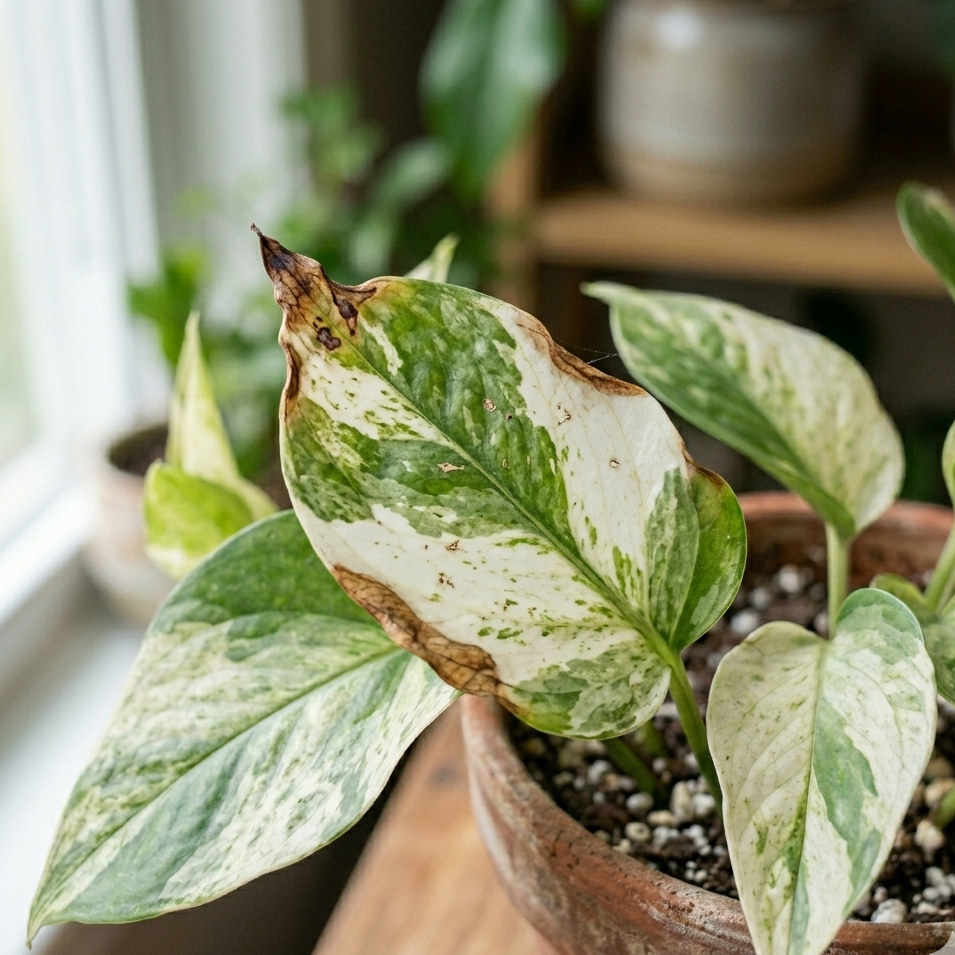
1. Powdery Mildew
One of the most common reasons leaves turn white is powdery mildew. This fungal disease creates a white powder-like coating on plant surfaces.
At first, small white spots appear. Soon afterward, the powder spreads across the leaf surface.
Common causes include:
- high humidity
- poor air circulation
- crowded plants
- damp foliage
To fix this problem:
- Remove heavily infected leaves
- Improve airflow around the plant
- Avoid watering leaves directly
- Apply a mild antifungal treatment
You can learn more about this disease in Powdery Mildew on Plants: Identification and Treatment.
2. Sunburn or Light Stress
Sometimes leaves turn white because they receive too much direct sunlight. This condition is often called leaf scorch or sunburn.
Plants that suddenly move into bright sunlight are especially vulnerable.
Typical symptoms include:
- pale white or yellow patches
- dry or crispy areas on leaves
- fading color on the upper surface
To solve this issue, move the plant slightly farther from the window. Bright indirect light is usually ideal for most indoor plants.
If lighting problems persist, check Low Light Problems in Indoor Plants to understand how light affects plant health.
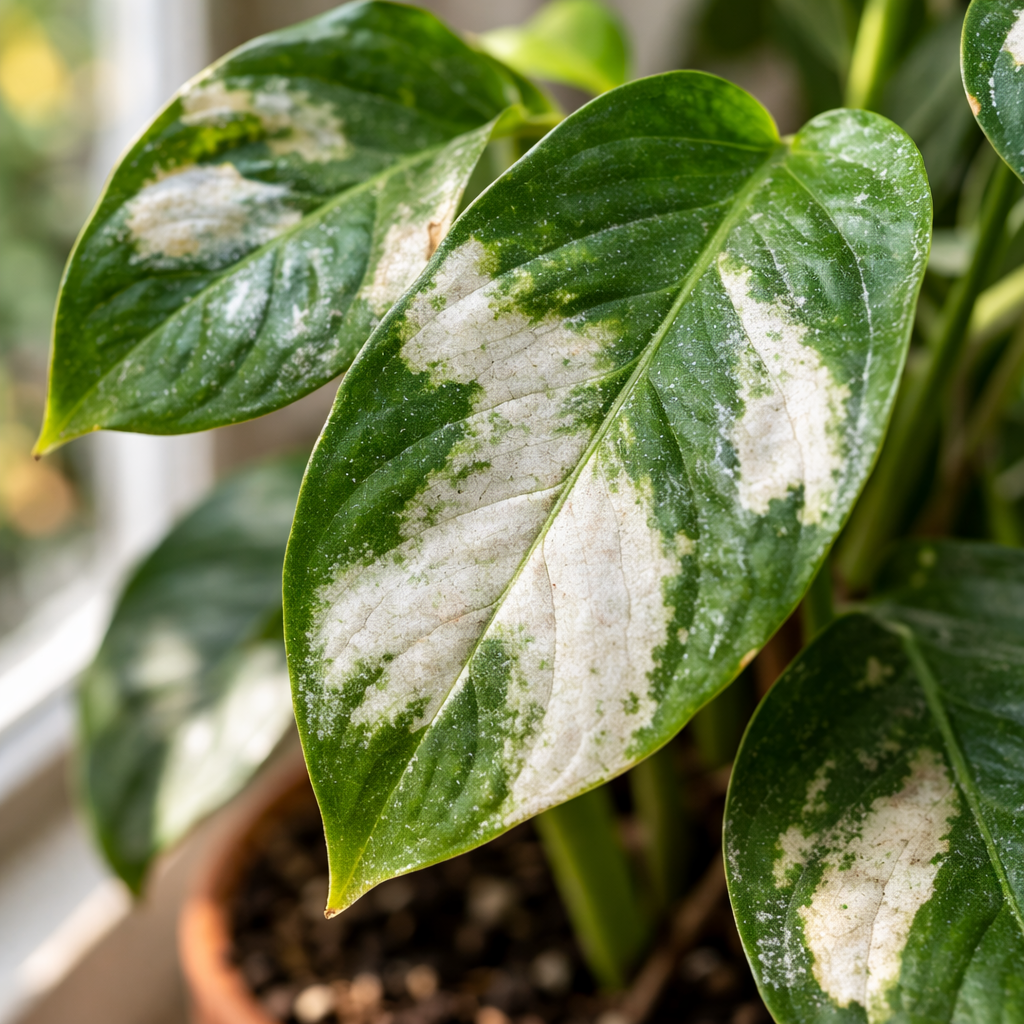
3. Spider Mites or Other Pests
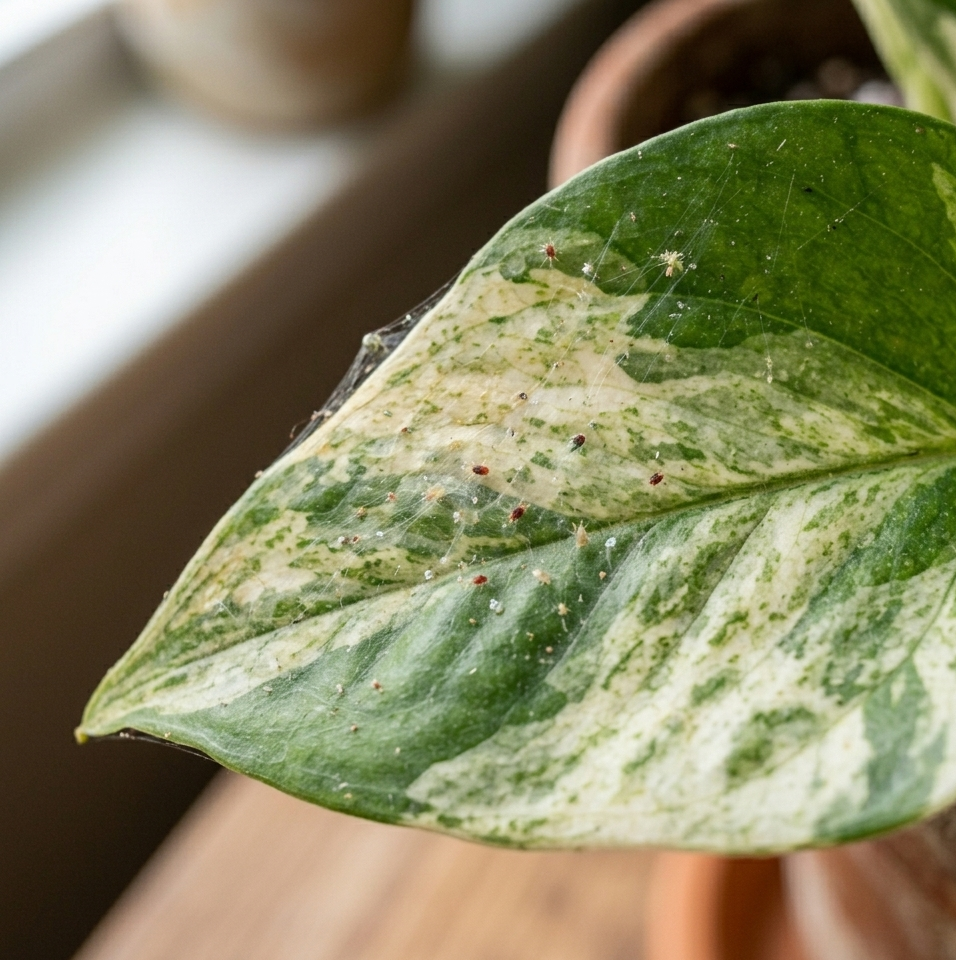
Tiny pests sometimes cause pale or white areas on leaves. Spider mites are a common example.
These pests feed by piercing plant cells and sucking plant sap. As a result, leaves develop tiny pale dots that gradually merge into larger white patches.
Signs of spider mites include:
- tiny white speckles on leaves
- thin webbing between stems
- dusty appearance on foliage
Early treatment prevents severe damage. For a full guide, read Spider Mites on Houseplants: Causes and Treatment.
4. Nutrient Deficiency
Plants also turn pale or white when they lack essential nutrients. Nitrogen deficiency is particularly common in indoor plants grown in old soil.
Without enough nutrients, leaves may appear:
- pale green
- yellowish white
- faded compared to healthy foliage
In this situation, feeding the plant with balanced fertilizer can restore healthy growth. However, avoid excessive fertilization because it may damage roots.
For more details, see Nitrogen Deficiency in Plants: Symptoms and Fixes.
5. Dust or Mineral Residue
Sometimes white leaves are not caused by disease at all. Instead, dust or mineral deposits may accumulate on the surface.
This situation often occurs when:
- hard tap water leaves mineral residue
- plants sit near dusty areas
- misting leaves leaves water marks
Cleaning the foliage usually solves the problem.
Use a soft damp cloth to gently wipe the leaves. Regular cleaning improves plant appearance and helps leaves absorb light more effectively.
How to Prevent White Leaves on Plants
Preventing leaf discoloration is easier than treating it later. Healthy plants resist disease and pests much better.
Follow these simple tips:
- provide proper light conditions
- water plants consistently
- improve air circulation
- inspect leaves regularly
- use healthy, well-draining soil
If watering problems occur, check How Often Should You Water Indoor Plants? to maintain the correct schedule.
Final Thoughts
White leaves may look worrying at first. Nevertheless, the underlying cause is usually easy to identify. Powdery mildew, pests, sunburn, or nutrient imbalance are the most common reasons.
Careful observation helps you diagnose the problem quickly. Once the cause becomes clear, small adjustments often restore healthy green growth.
With proper care and attention, your plant can recover and continue thriving indoors.