Mold in indoor plant pots can look alarming. However, in most cases, it is completely fixable. Although the white fuzzy layer may seem dangerous, it usually signals a deeper moisture problem rather than a deadly disease.
Still, ignoring it can quietly weaken your plant over time. Therefore, early action is absolutely essential.
What Does Mold in Indoor Plant Pots Look Like?
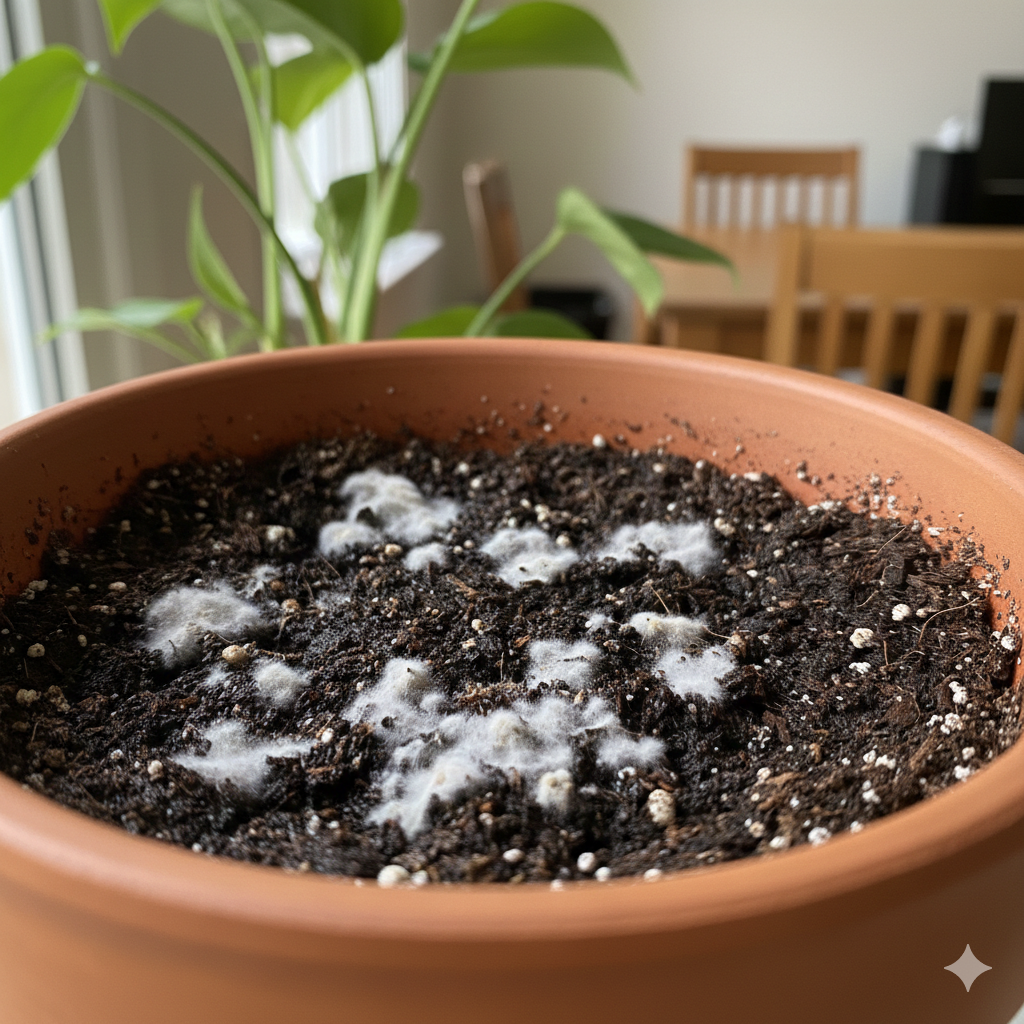
Typically, mold appears as:
- White fuzzy patches
- Gray powdery growth
- Light green surface film
- Slight musty odor
At first glance, it may resemble mineral buildup. On the other hand, mold feels soft and spreads gradually.
If you’re unsure, you might also read:
👉 How to Treat Mold on Soil and Plant Stems
Why Mold Forms in Plant Pots
Several hidden triggers cause mold to develop.
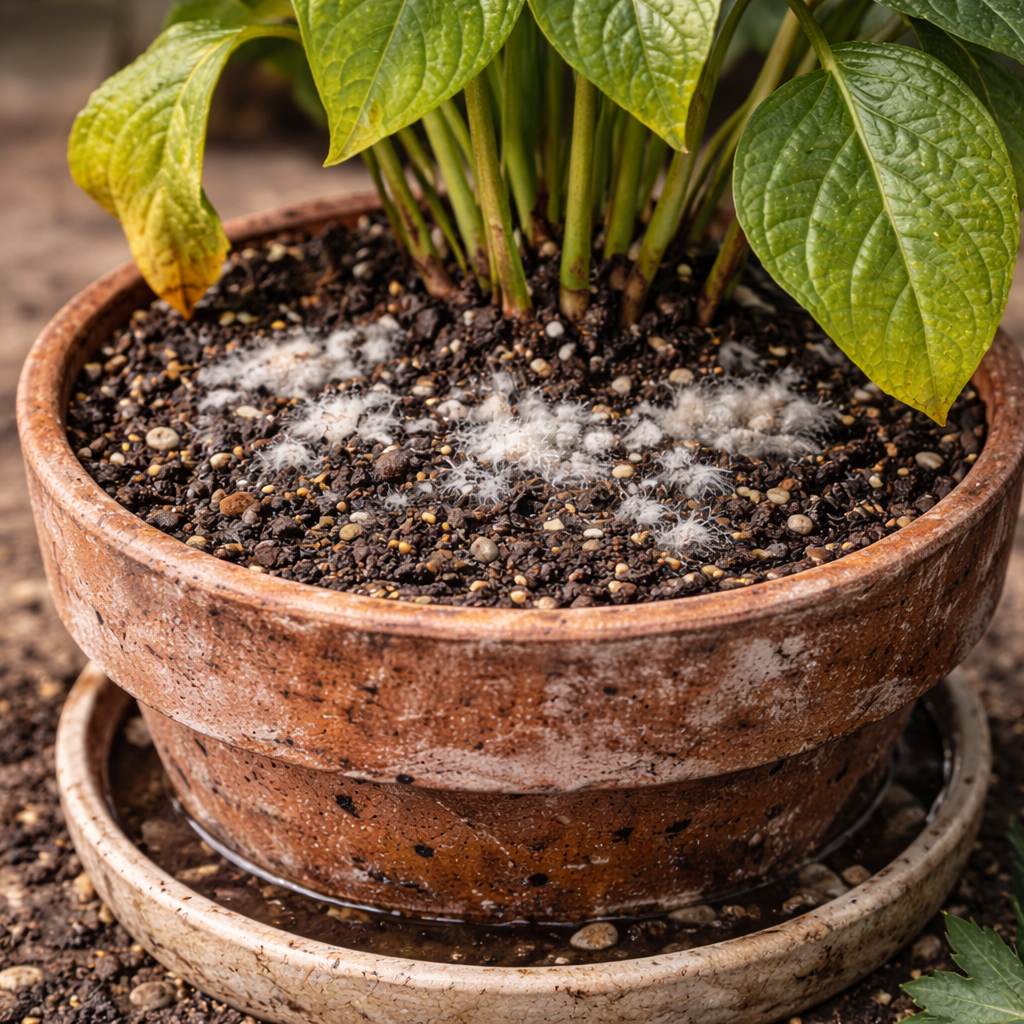
First, overwatering creates a persistently damp environment. As a result, fungal spores thrive.
Second, poor drainage prevents excess moisture from escaping.
Additionally, low airflow dramatically increases fungal growth indoors.
Meanwhile, decomposing organic matter in soil feeds the fungus.
Because of this combination, mold often appears during winter when evaporation slows.
You may also want to check:
👉 Overwatering Plants: Signs, Effects, and Solutions
Is Mold Dangerous to Plants?
In most cases, surface mold is not directly lethal. Nevertheless, it indicates conditions that can become harmful.
For example, constantly wet soil may lead to root rot — a devastating and irreversible problem if untreated.
Learn more here:
👉 Root Rot in Plants: Causes, Symptoms, and How to Save Your Plant
Moreover, mold can attract fungus gnats. Consequently, pests may follow moisture issues.
Powerful Ways to Remove Mold
Follow these steps for a rapid recovery:
1️⃣ Scrape Off Surface Mold
Carefully remove the top layer of affected soil. Afterwards, discard it immediately.
2️⃣ Improve Air Circulation
Move the plant to a brighter, well-ventilated area. Fresh airflow significantly reduces fungal activity.
3️⃣ Adjust Watering Habits
Allow the top 2–3 cm of soil to dry before watering again. Consistency here is critical.
4️⃣ Replace Contaminated Soil
If mold returns aggressively, repot using fresh, sterile soil.
If watering confusion is common, read:
👉 Best Watering Schedule for Houseplants
How to Prevent Mold in Indoor Plant Pots
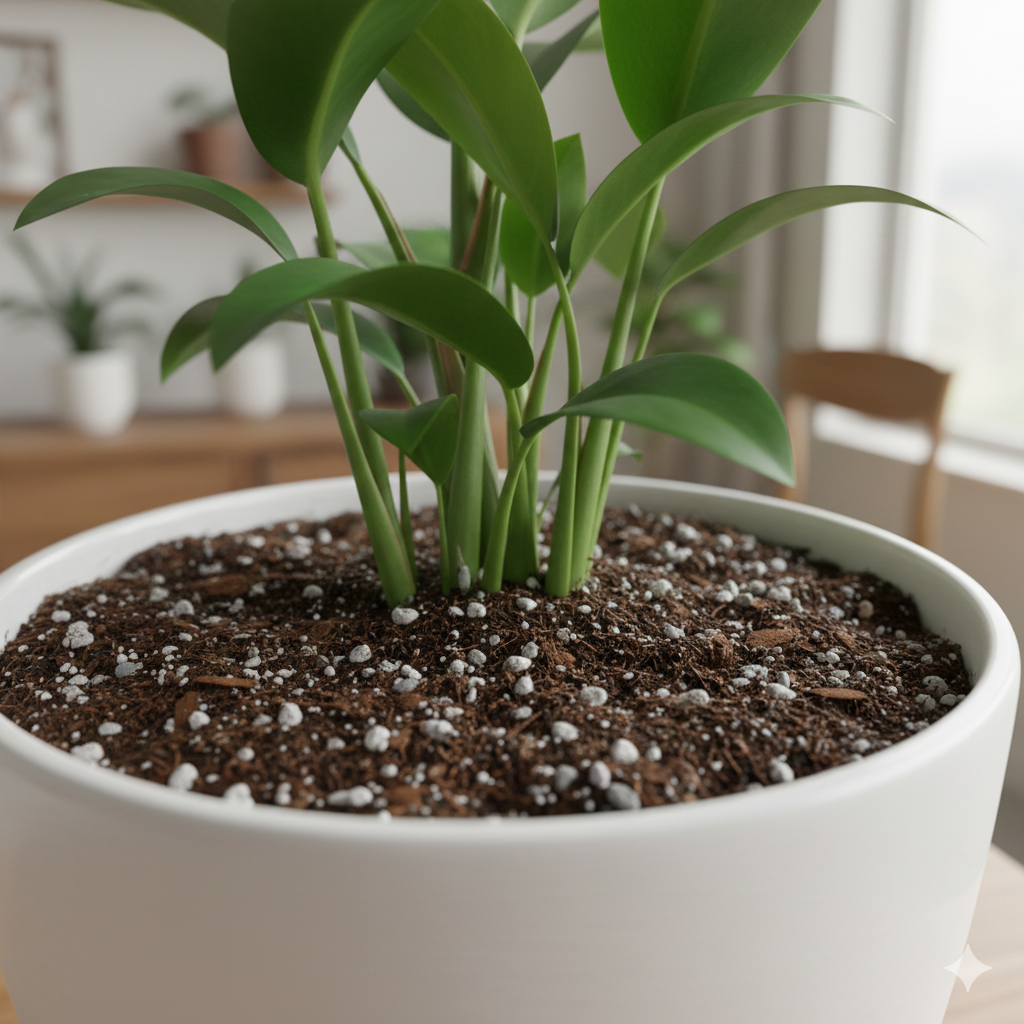
Prevention is far easier than removal.
- Use pots with drainage holes
- Add perlite for aeration
- Avoid constant misting
- Empty saucers after watering
- Increase natural light exposure
Furthermore, balanced fertilization strengthens plants, making them more resilient.
You might also like:
👉 Signs of Nutrient Deficiency in Plants
👉 How to Revive a Dying Houseplant
When Mold Signals a Bigger Problem
Occasionally, recurring mold points to chronic overwatering or compacted soil. In that case, drainage improvement becomes non-negotiable.
If leaves start yellowing or wilting, act immediately.
Helpful reads:
👉 Yellow Leaves on Plants: Causes and Solutions
👉 Why Are Indoor Plants Dying? Common Mistakes
Final Thoughts
Mold in indoor plant pots may look unsettling. However, it is usually a warning sign rather than a disaster. With small but strategic changes, you can eliminate it and protect your plant’s health long term.
Act quickly, adjust watering habits, and improve airflow. As a result, your houseplants will thrive in a cleaner, healthier environment.