
Winter can be a stressful season for indoor plants. Although they are protected from frost, they still suffer from low light, dry air, and improper watering. As a result, many plants weaken or even die during colder months. However, with the right care, you can keep your houseplants healthy, vibrant, and resilient all winter long.
This guide will walk you through practical, proven steps to protect your plants and avoid costly mistakes.
Why Indoor Plants Struggle in Winter
During winter, plants naturally slow their growth. Because daylight hours are shorter, photosynthesis decreases. Meanwhile, indoor heating dries the air and warms the soil unevenly. Consequently, roots absorb water differently, which often leads to problems.
Most winter plant issues are not caused by cold itself. Instead, they come from care routines that don’t adjust with the season.
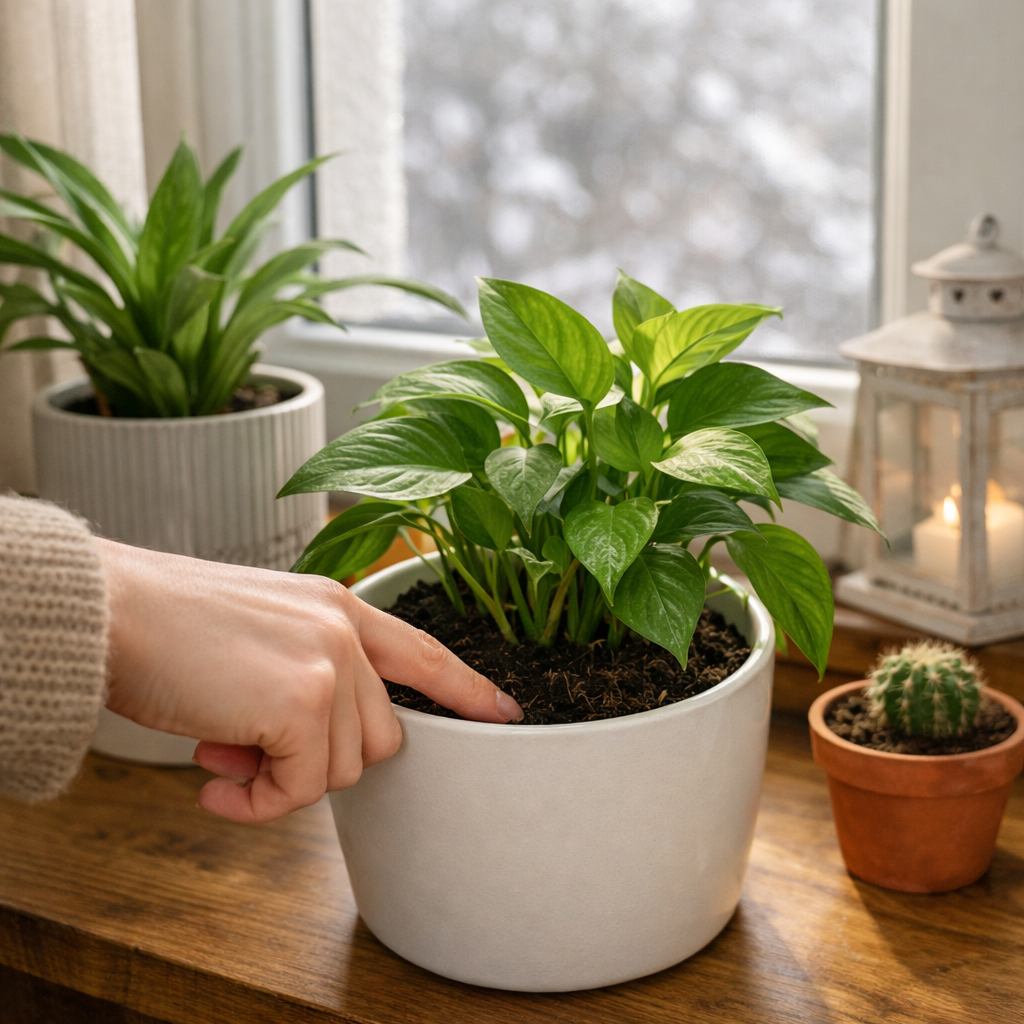
Reduce Watering (But Don’t Stop)
Watering mistakes are the number one reason indoor plants decline in winter.
Because growth slows, plants need less water. Therefore, soil that stays wet for too long can suffocate roots.
What to do:
- Always check soil moisture before watering
- Let the top layer of soil dry out
- Use room-temperature water
- Empty excess water from saucers
👉 Overwatering Plants: Signs, Effects, and Solutions
👉 Underwatering Plants: How to Tell and What to Do
Increase Light Exposure
Winter sunlight is weaker and less consistent. Even bright rooms may not provide enough light. As a result, plants may become leggy, pale, or weak.
Helpful tips:
- Move plants closer to windows
- Clean dust from leaves regularly
- Rotate pots weekly
- Use grow lights if needed
👉 Low Light Problems in Indoor Plants
👉 Internal link: Leggy Plants: Causes and How to Fix Them
Adjust Indoor Temperature Carefully
Although warmth feels comforting to us, plants dislike sudden temperature changes. Drafts, heaters, and radiators can silently damage foliage.
Best practices:
- Keep plants away from heat sources
- Avoid cold window drafts at night
- Maintain stable temperatures between 18–22°C (65–72°F)
Consistency is far more important than warmth alone.
Increase Humidity for Healthier Leaves
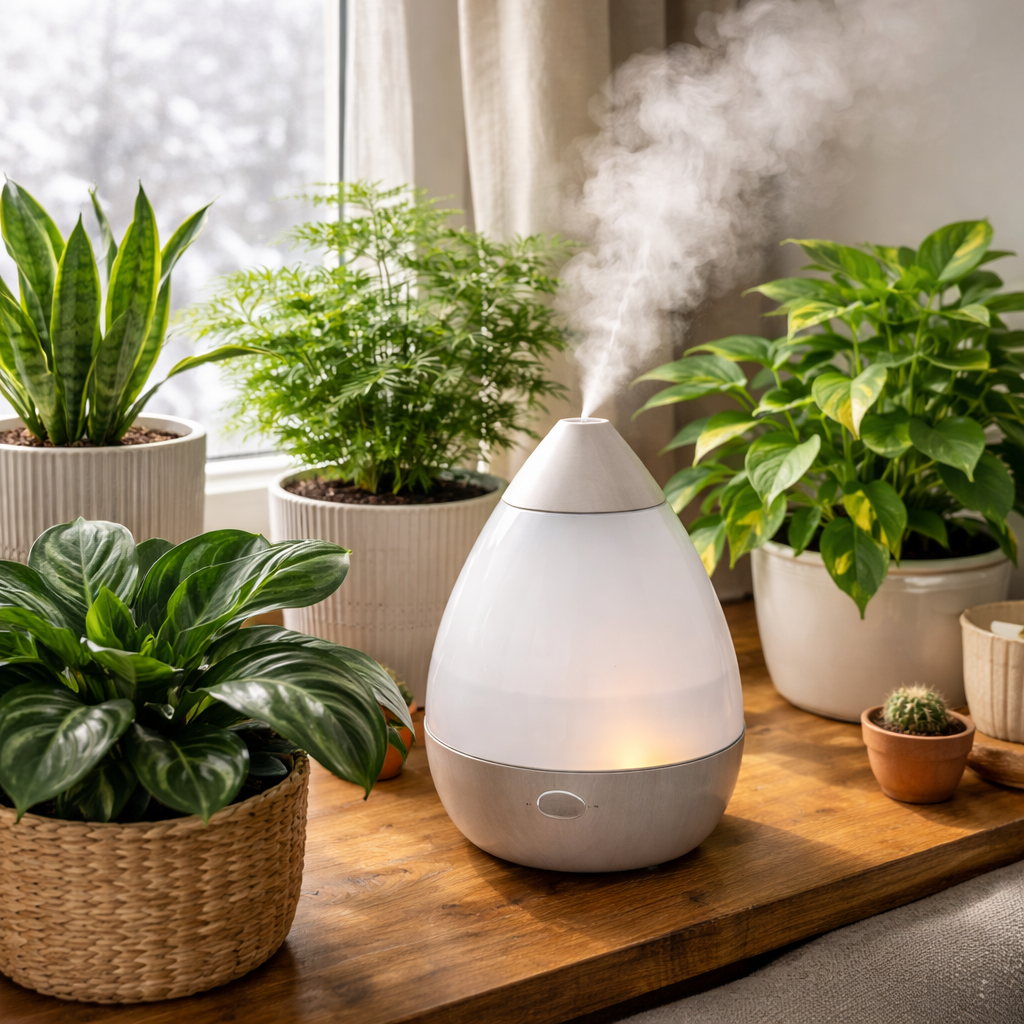
Indoor heating dramatically reduces humidity. Consequently, leaf tips turn brown, edges curl, and pests become more active.
Easy ways to raise humidity:
- Group plants together
- Use a humidifier
- Place pots on pebble trays with water
👉 Brown Tips on Leaves: What They Mean
👉 Why Are My Plant Leaves Curling?
Pause Fertilizing Until Spring
Feeding plants during winter is often harmful rather than helpful. Since growth slows, unused nutrients accumulate and damage roots.
Winter rule:
- Stop fertilizing most plants
- Resume feeding in early spring
- Exception: actively growing plants under grow lights
👉 Internal link: How to Use Fertilizers Correctly Without Harming Plants
Watch for Pests and Mold
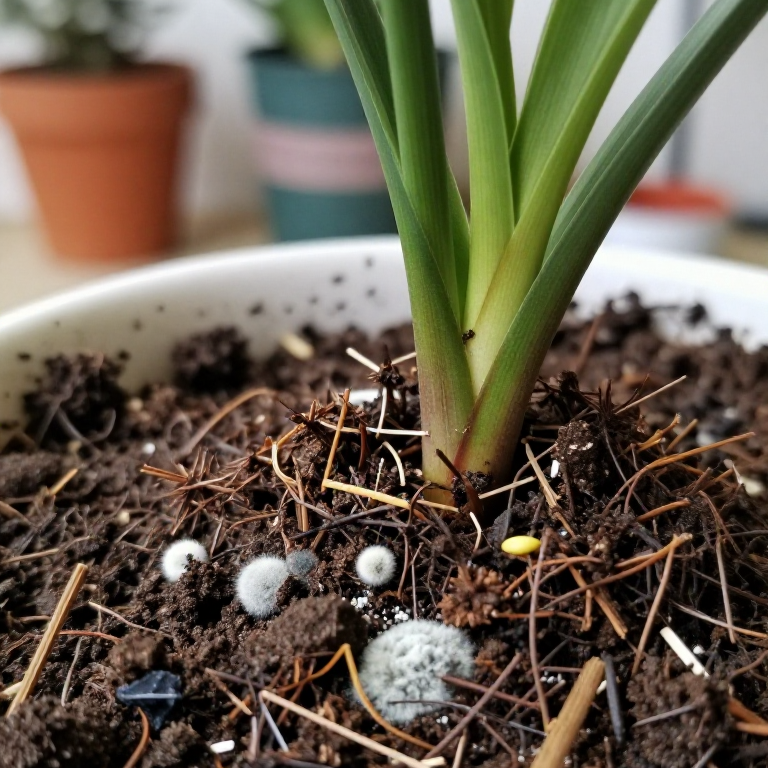
Ironically, winter creates perfect conditions for pests and mold. Weak plants and stagnant air increase the risk.
Stay alert for:
- Spider mites
- Fungus gnats
- Mold on soil surface
👉 Spider Mites on Houseplants: Causes and Treatment
👉 Internal link: Mold in Indoor Plant Pots: Causes and Prevention
Don’t Repot Unless Necessary
Although repotting seems helpful, winter is the worst time for most plants. Roots recover slowly, which increases stress.
Only repot if:
- Roots are severely compacted
- Plant is declining rapidly
- Soil is completely degraded
Otherwise, wait until spring for best results.
👉 Best Soil for Healthy Plant Growth
Final Thoughts
Winter care is not about doing more. Instead, it’s about doing less—but smarter. By adjusting watering, improving light, and protecting plants from dry air, you give them exactly what they need to survive the cold months.
With these powerful yet simple steps, your plants won’t just survive winter — they’ll thrive with quiet strength until spring returns.
👉 Internal link: How to Revive a Dying Houseplant