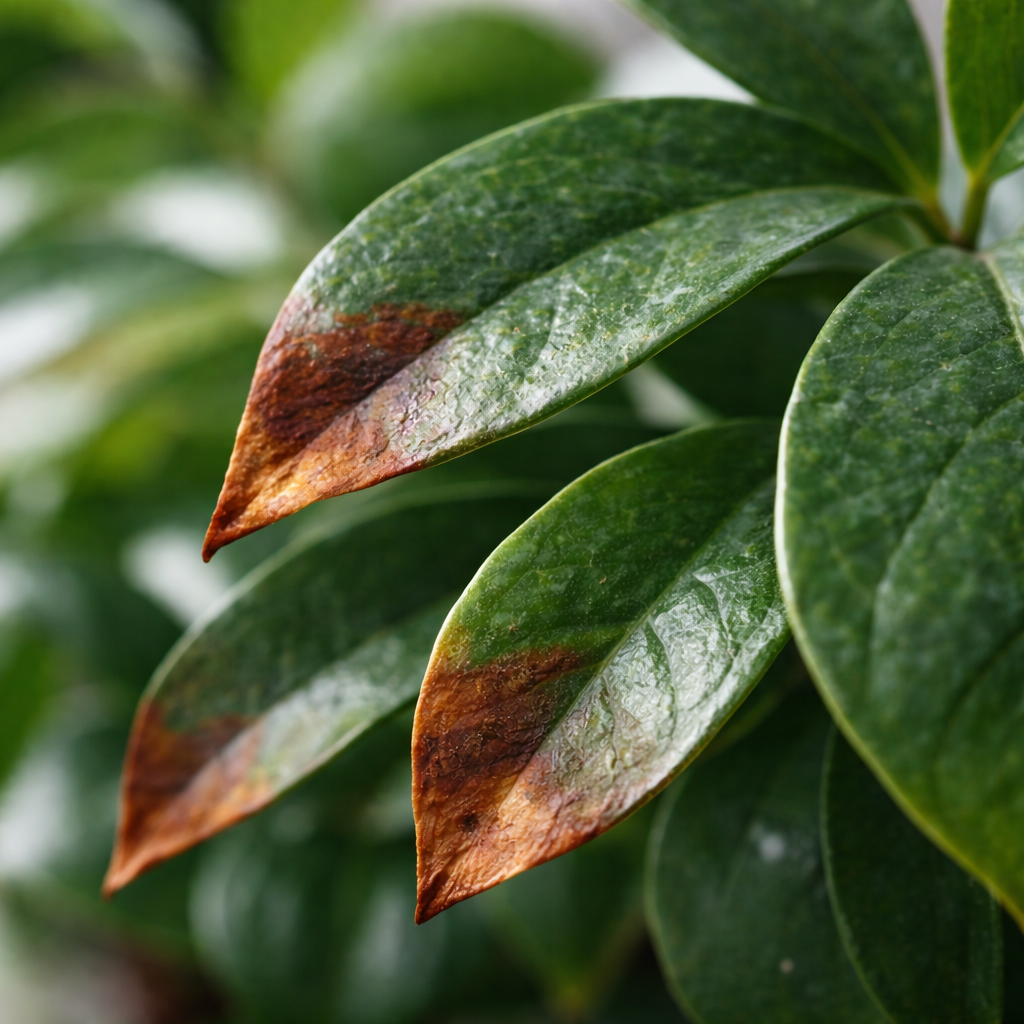
Brown tips on leaves are one of the most common plant problems faced by indoor gardeners. Although this symptom may look alarming, it usually develops gradually and indicates environmental stress rather than disease.
Fortunately, once you understand what brown leaf tips mean, identifying the cause becomes much easier. As a result, timely care adjustments often stop the problem from spreading.
Why Do Leaves Get Brown Tips?
In most cases, brown tips appear when a plant struggles to maintain proper moisture balance. Instead of affecting the entire leaf, stress usually shows first at the edges.
Moreover, multiple factors may contribute at the same time. Therefore, it is important to review watering habits, humidity levels, and soil condition together.
Common Causes of Brown Tips on Leaves
1. Underwatering
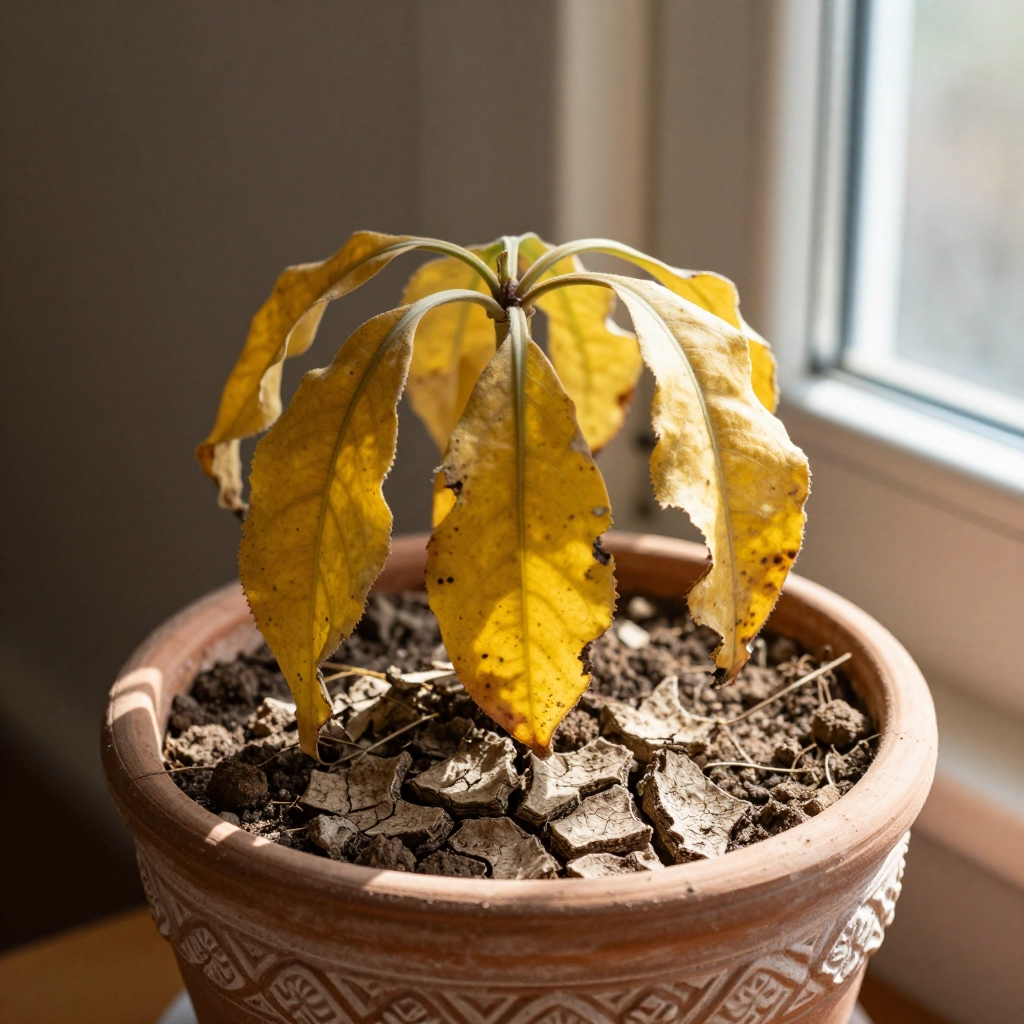
Most commonly, brown tips on leaves develop when plants do not receive enough water. As soil dries out, leaf edges lose moisture first.
Additionally, prolonged dryness prevents roots from absorbing nutrients efficiently.
👉 Underwatering Plants: How to Tell and What to Do
2. Low Humidity
Equally important, low humidity is a frequent cause of brown tips on leaves, especially for tropical houseplants. Dry air pulls moisture from leaf edges faster than roots can replace it.
Consequently, brown tips may appear even when watering seems adequate.
👉 Low Light Problems in Indoor Plants
3. Excess Fertilizer or Salt Buildup
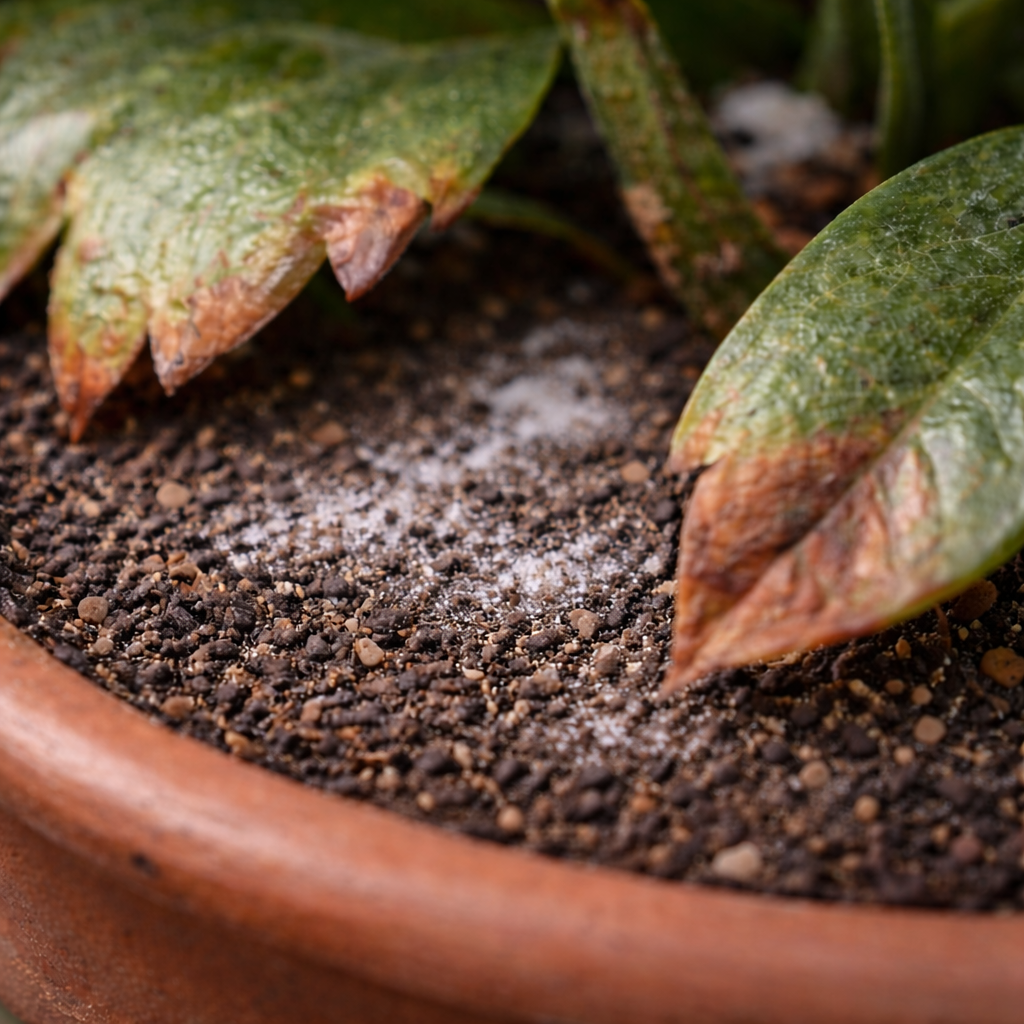
Although fertilizer supports healthy growth, overuse can lead to salt buildup in soil. Over time, salts damage roots and cause leaf tips to burn.
For this reason, fertilizing more often does not always improve plant health.
👉 How to Use Fertilizers Correctly Without Harming Plants
4. Poor Water Quality
In some situations, brown tips result from chemicals in tap water, such as chlorine or fluoride. Sensitive plants show damage first along leaf edges.
Therefore, switching to filtered or distilled water may reduce recurring tip burn.
How to Identify the Exact Cause
Before making changes, observe your plant carefully. For example:
- Dry soil usually points to underwatering
- Crispy tips with moist soil suggest low humidity
- White crust on soil indicates fertilizer buildup
By comparing these signs, you can choose the correct solution instead of guessing.
How to Fix Brown Tips on Leaves
First, trim only the brown portions using clean scissors. Then, adjust plant care based on the identified cause.
Afterward, improve watering consistency, increase humidity if needed, and flush soil occasionally to remove excess salts.
If your plant is already declining, this guide may help:
👉 How to Revive a Dying Houseplant
How to Prevent Brown Tips on Leaves
Prevention is always easier than treatment. Therefore, follow these steps:
- Water consistently
- Maintain moderate humidity
- Avoid overfertilizing
- Use well-draining soil
- Monitor water quality
Over time, these habits significantly reduce leaf tip damage.
Are Brown Tips on Leaves a Disease?
In most cases, brown tips are not caused by plant diseases. Instead, they reflect environmental stress or improper care.
However, if discoloration spreads rapidly or appears with mold, further inspection may be required.
👉 Fungal Diseases in Garden Plants and How to Prevent Them
Final Thoughts
Although brown tips on leaves may look unattractive, they are usually easy to correct. Once the underlying issue is addressed, new growth typically appears healthy and green.
By responding early, you can keep your plants thriving and avoid repeated damage.