
First, yellow leaves on plants are very common. Gardeners often notice this problem early. However, it’s usually a sign that something in the plant’s care routine needs adjustment.
In this article, we’ll explore the most common causes of yellow leaves on plants and explain simple, effective solutions to restore your plant’s health.
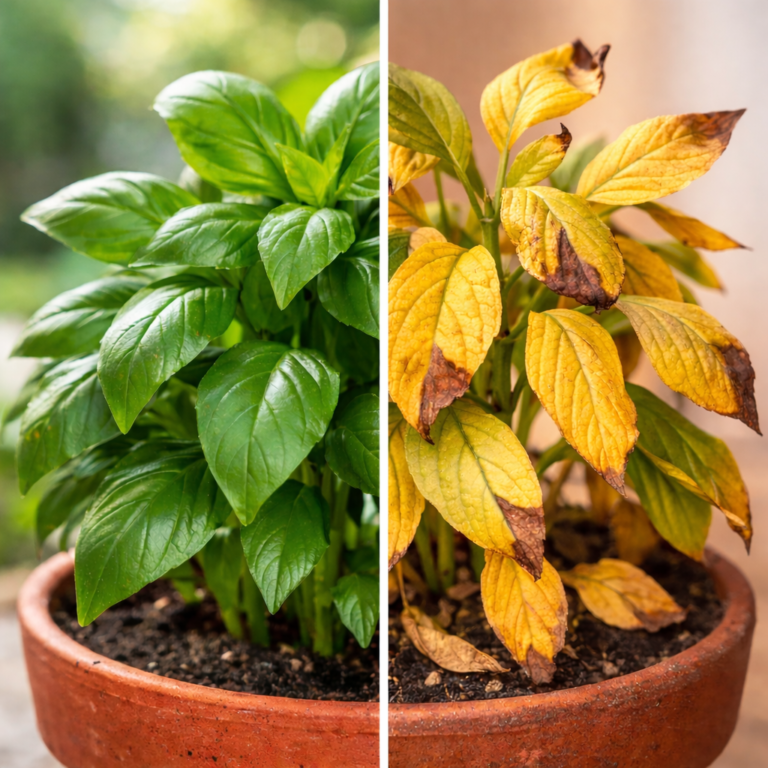
Common Causes of Yellow Leaves on Plants
Overwatering
Often, overwatering is the leading cause of yellow leaves. When soil stays too wet, plant roots can’t absorb oxygen properly, leading to stress and leaf discoloration.
Signs of overwatering:
- Yellow, soft leaves
- Wet or soggy soil
- Wilting despite frequent watering
Solution:
Next. allow the soil to dry between waterings and ensure the pot has proper drainage.
Underwatering
Also, when plants don’t receive enough water, they may also develop yellow leaves as a stress response.
Signs of underwatering:
- Dry, brittle leaves
- Soil pulling away from the pot edges
- Drooping foliage
Solution:
Water thoroughly and establish a consistent watering schedule.
Poor Drainage
In addition, poor drainage can cause water to accumulate around the roots, even if you water correctly.
Solution:
- Use pots with drainage holes
- Improve soil structure by adding perlite or sand
Nutrient Deficiency
Furthermore, lack of essential nutrients, especially nitrogen, can cause leaves to turn yellow.
Solution:
Use a balanced fertilizer and follow recommended feeding instructions to avoid over-fertilization.
Lack of Light
Finally, plants that receive too little light may develop yellow leaves as they struggle to photosynthesize.
Solution:
Move the plant to a brighter location with indirect sunlight.
How to Fix Yellow Leaves on Plants
Follow these steps to help your plant recover:
- Check soil moisture before watering
- Improve drainage if needed
- Adjust light exposure
- Feed plants with appropriate nutrients
- Remove severely damaged leaves
When Yellow Leaves On Plants Are Normal
Sometimes, yellow leaves are part of a natural process. Older leaves may yellow and drop as new growth appears. Therefore, If the rest of the plant looks healthy, this is usually not a concern.
Final Thoughts
In conclusion, yellow leaves on plants are a clear signal that something needs attention. By identifying the cause early and making small adjustments, you can restore your plant’s health and prevent future problems.
Healthy plants start with proper care, observation, and patience.